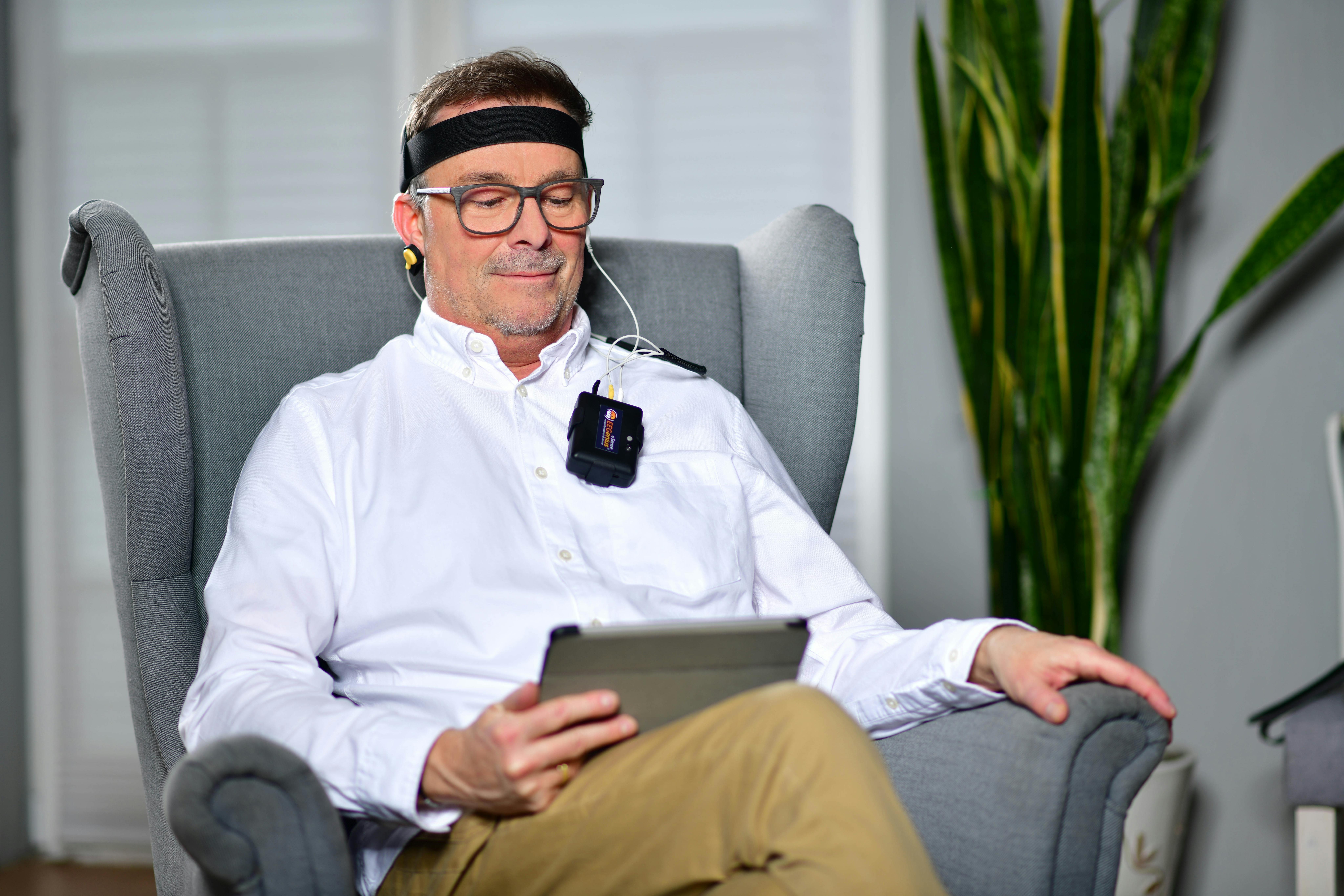
Your brain operates like a finely tuned orchestra, with billions of neurons creating rhythmic patterns that influence every aspect of your consciousness, productivity, and well-being.

Modern neuroscience has revealed something extraordinary: these neural rhythms aren’t fixed. Through specific techniques and technologies, you can deliberately shift your brainwave patterns to access states of deep focus, creativity, relaxation, and healing. This process, known as meditative brainwave optimization, represents one of the most powerful tools available for personal transformation and cognitive enhancement.
The implications are profound. Imagine being able to conscially shift from stress to tranquility, from mental fog to laser-sharp focus, or from anxiety to profound peace—all by understanding and influencing your brain’s electrical activity. This isn’t science fiction; it’s the cutting edge of neuroscience meeting ancient wisdom.
🧠 Understanding Your Brain’s Natural Frequencies
Your brain generates electrical activity constantly, creating measurable wave patterns that scientists have categorized into distinct frequency bands. Each type of brainwave corresponds to specific mental and emotional states, and understanding these patterns is the foundation of optimization.
Beta waves (12-30 Hz) dominate when you’re alert, focused, and actively thinking. This is your typical waking consciousness, essential for problem-solving and analytical tasks. However, excessive beta activity leads to anxiety, stress, and the mental exhaustion many people experience daily.
Alpha waves (8-12 Hz) emerge during relaxed awareness—that peaceful state when you’re awake but calm. This frequency range serves as a bridge between conscious and subconscious mind, making it ideal for learning, creativity, and stress reduction. Alpha states are what meditation practices typically cultivate first.
Theta waves (4-8 Hz) characterize deep meditation, light sleep, and heightened intuition. In theta, your subconscious becomes more accessible, making this state powerful for emotional healing, creative insights, and memory consolidation. Children naturally spend more time in theta, which explains their incredible learning capacity.
Delta waves (0.5-4 Hz) represent the slowest brainwave frequency, associated with deep, dreamless sleep and profound healing. Your body performs its most intensive repair and regeneration in delta states. Access to delta while maintaining awareness is considered an advanced meditative achievement.
Gamma waves (30-100 Hz) are the fastest frequencies, linked to peak cognitive performance, heightened perception, and states of universal love and compassion. Buddhist monks in deep meditation show remarkable gamma activity, suggesting these frequencies connect to expanded consciousness.
The Neuroscience Behind Meditative Optimization ✨
When you practice meditation or use brainwave entrainment technologies, you’re literally reshaping your brain’s physical structure through neuroplasticity. This biological principle explains how consistent practice creates lasting changes in consciousness and behavior.
Research using functional MRI and EEG technology has demonstrated that regular meditation increases gray matter density in brain regions associated with memory, emotional regulation, and self-awareness. The prefrontal cortex—your brain’s executive control center—becomes more developed, while the amygdala, responsible for fear and stress responses, actually shrinks.
Brainwave entrainment works through a phenomenon called frequency following response. When your brain is exposed to rhythmic stimuli at specific frequencies—whether through sound, light, or electromagnetic pulses—it naturally synchronizes to those patterns. This principle allows you to guide your brain toward desired states with remarkable precision.
The default mode network, a brain system active during rest and self-reflection, shows decreased activity during deep meditation. This correlates with the dissolution of ego boundaries and the experience of unity consciousness that many meditators report. Understanding this mechanism helps explain meditation’s profound psychological effects.
🎯 Practical Techniques for Brainwave Optimization
Traditional meditation remains the most accessible and time-tested method for brainwave optimization. Mindfulness meditation, which involves non-judgmental awareness of present-moment experience, naturally shifts brain activity from beta to alpha and theta frequencies. Starting with just ten minutes daily can produce measurable changes within weeks.
Breath-focused techniques offer immediate access to altered brainwave states. By deliberately slowing your breathing to approximately six breaths per minute, you activate the parasympathetic nervous system and promote alpha wave production. This practice requires no equipment and can be performed anywhere.
Binaural beats technology presents a modern approach to brainwave entrainment. When different frequencies are played in each ear through headphones, your brain perceives a third frequency equal to the difference—and begins synchronizing to that perceived beat. A 400 Hz tone in one ear and 410 Hz in the other creates a 10 Hz binaural beat, promoting alpha states.
Isochronic tones provide another audio entrainment method that doesn’t require headphones. These evenly spaced pulses turn on and off at specific frequencies, creating a more pronounced entrainment effect that some users find more powerful than binaural beats.
Neurofeedback represents the most advanced and personalized optimization approach. By monitoring your real-time brainwave activity through EEG sensors, you receive immediate feedback that helps you learn to consciously control your brain states. While traditionally expensive and requiring specialized clinics, consumer-grade neurofeedback devices are making this technology increasingly accessible.
Building Your Personal Optimization Practice 🌟
Success with brainwave optimization requires consistency rather than intensity. Your brain responds better to regular, shorter sessions than occasional marathon practices. Fifteen to twenty minutes daily produces more sustainable results than sporadic longer sessions.
Create a dedicated space for your practice, even if it’s just a corner of a room. Environmental consistency helps trigger the relaxation response more quickly over time. Your brain begins associating that space with specific brainwave states, making it easier to access desired frequencies.
Time of day matters significantly. Morning practice, soon after waking, capitalizes on naturally elevated theta activity, making deep states more accessible. Evening sessions support better sleep quality by training your brain to shift smoothly into delta frequencies. Experiment to discover what timing serves your goals best.
Combining modalities amplifies results. Try pairing traditional meditation with binaural beats, or use breathwork while receiving neurofeedback. These synergistic approaches often produce breakthroughs when single techniques plateau.
Track your progress systematically. Keep a simple journal noting session duration, techniques used, and subjective experiences. This data helps you identify patterns and optimize your approach over time. Many meditation apps include built-in tracking features that simplify this process.
🎧 Technology-Enhanced Meditation Applications
Several sophisticated applications now offer scientifically-designed audio programs for brainwave entrainment. These tools make optimization accessible to beginners while providing depth for experienced practitioners.
Brain.fm uses AI-generated music specifically engineered to enhance focus, relaxation, or sleep by incorporating precise frequencies and rhythmic patterns. The service employs proprietary technology based on neuroscience research, offering functional music that works distinctly differently from typical background audio.
Insight Timer provides one of the world’s largest free libraries of guided meditations, including numerous tracks specifically designed for brainwave entrainment. With offerings from neuroscientists, Buddhist monks, and sleep specialists, it serves practitioners at every level.
For those interested in combining wearable technology with meditation, Muse offers a meditation headband that reads your brainwave activity and provides real-time audio feedback. When your mind wanders and beta activity increases, you hear storm sounds; as you settle into meditative states, the audio shifts to peaceful weather. This immediate biofeedback accelerates the learning curve significantly.
Scientific Evidence and Measurable Benefits 📊
The research supporting meditative brainwave optimization continues expanding, with thousands of peer-reviewed studies documenting tangible benefits across physical, mental, and emotional domains.
Cognitive performance improvements are consistently documented. Studies show enhanced working memory, improved attention span, and better executive function after just eight weeks of regular meditation practice. These changes correlate directly with increased alpha and theta wave activity during task performance.
Stress reduction represents one of the most robust findings. Meditation practices that optimize brainwave patterns reduce cortisol levels, decrease inflammatory markers, and improve heart rate variability—all indicating enhanced stress resilience. Corporate programs implementing these techniques report significant reductions in employee burnout and absenteeism.
Sleep quality shows remarkable improvement with brainwave optimization practices. Training your brain to transition smoothly into delta frequencies addresses insomnia more effectively than many pharmaceutical interventions, without side effects. Users of brainwave entrainment for sleep report falling asleep faster and experiencing more restorative rest.
Emotional regulation becomes significantly easier as you develop conscious control over your brainwave patterns. The ability to shift from agitated beta states to calm alpha frequencies on demand provides a powerful tool for managing anxiety, depression, and emotional reactivity.
Creative performance benefits from intentional theta state access. Artists, writers, and innovators who practice brainwave optimization report enhanced creative flow, breakthrough insights, and more frequent “aha moments.” The theta-gamma coupling observed in highly creative individuals can be cultivated through consistent practice.
🚀 Advanced Optimization Strategies
Once you’ve established foundational practices, several advanced techniques can deepen your mastery of brainwave states and accelerate your progress.
Lucid dreaming practices leverage the theta-dominant state between waking and sleeping. By maintaining awareness as you transition into sleep, you can explore consciousness in ways that provide profound insights and healing opportunities. This practice develops exceptional control over your brain’s frequency shifting.
Floatation therapy, also called sensory deprivation tanks, creates conditions that dramatically enhance theta wave production. The elimination of external stimuli allows your brain to shift into deeply meditative states that might otherwise take years of practice to access. Regular float sessions complement and accelerate standard meditation practices.
Brainwave synchronization with a partner or group creates unique states not easily accessible individually. When experienced meditators practice together, their brainwave patterns can synchronize, producing collective states of heightened awareness. This phenomenon, documented in research on group meditation, suggests consciousness extends beyond individual brains.
Integrating brainwave optimization with other consciousness practices amplifies effects. Combining it with yoga, tai chi, or qigong leverages the mind-body connection more completely. The physical practices facilitate brainwave shifts while the meditation practices deepen the somatic experience.
Overcoming Common Challenges and Obstacles 💪
Nearly everyone encounters difficulties when beginning brainwave optimization practices. Understanding common obstacles helps you navigate them successfully rather than becoming discouraged.
The busy mind represents the most frequent complaint. When you’re accustomed to constant beta wave dominance, your brain initially resists shifting to slower frequencies. This is completely normal. Rather than fighting thoughts, simply observe them without engagement. Each time you notice your mind wandering and gently return to focus, you’re strengthening neural pathways for intentional frequency control.
Physical discomfort during practice often disrupts beginners. Sitting in meditation can reveal tension patterns you’ve been unconsciously maintaining. Start with shorter sessions and prioritize comfort over traditional postures. As your practice deepens and your body learns to relax more completely, discomfort naturally diminishes.
Inconsistent practice undermines results more than any other factor. Life inevitably creates scheduling challenges, but brainwave optimization requires regularity to produce neuroplastic changes. On busy days, even five minutes of practice maintains momentum and preserves the neural adaptations you’re cultivating.
Unrealistic expectations can create frustration. Media portrayals of meditation sometimes suggest immediate transcendence, but genuine transformation occurs gradually. Celebrate small victories: falling asleep more easily, feeling slightly calmer during stress, or noticing when your mind wanders sooner. These subtle improvements indicate your brain is changing.
🌈 Integrating Optimization into Daily Life
The ultimate goal isn’t just achieving altered states during formal practice but carrying that enhanced awareness and control into everyday activities. This integration represents the true mastery of brainwave optimization.
Micro-meditations throughout your day maintain the benefits of longer sessions. Taking three conscious breaths before meetings, while waiting in line, or during transitions between activities keeps you connected to your optimized brainwave patterns. These brief interventions prevent the accumulation of stress and maintain cognitive clarity.
Mindful transitions between activities preserve mental resources. Rather than jumping immediately from one task to another, pause for thirty seconds to acknowledge the completion of one activity before beginning the next. This simple practice prevents the beta wave overwhelm that leads to exhaustion.
Evening wind-down routines that incorporate brainwave optimization techniques dramatically improve sleep quality and next-day performance. Creating a consistent sequence—perhaps dimming lights, practicing gentle breathwork, and listening to theta-frequency entrainment—signals your brain to begin its natural transition toward delta states.
Morning optimization practices set your brain’s baseline for the entire day. Starting with even ten minutes of meditation or brainwave entrainment creates a foundation of calm alertness that you’ll maintain more easily throughout subsequent activities.
Your Personalized Optimization Blueprint 🎨
No single approach works optimally for everyone. Your unique neurobiology, lifestyle, goals, and preferences require a customized strategy for maximum benefit.
Begin by identifying your primary objectives. Are you seeking stress reduction, enhanced focus, creative breakthrough, better sleep, or spiritual development? Different goals benefit from emphasizing different brainwave frequencies and techniques.
Experiment systematically with various modalities. Spend at least two weeks with each approach—traditional meditation, binaural beats, guided visualizations, breathwork—before evaluating its effectiveness for you. Keep detailed notes on your experiences to identify what produces the best results.
Consider your natural chronotype when scheduling practice. If you’re naturally alert in the morning, that might be ideal for focus-oriented alpha training. Evening types might find deeper meditative states more accessible later in the day. Work with your biology rather than against it.
Adjust your practice as your life circumstances change. Stressful periods might benefit from more alpha-focused relaxation practices, while creative projects could emphasize theta-state access. Your optimization strategy should be dynamic, adapting to your current needs rather than remaining static.

The Broader Impact of Optimized Consciousness 🌍
Individual brainwave optimization creates ripple effects extending far beyond personal benefits. As you develop greater emotional regulation, cognitive clarity, and inner peace, these qualities naturally influence your relationships, work, and community.
Enhanced emotional intelligence emerges as you gain conscious access to different brain states. Recognizing that you can shift from reactive beta patterns to calm alpha awareness changes how you navigate conflicts and challenges. This capacity transforms not just your experience but how others experience you.
Collective consciousness shifts as more individuals optimize their brainwave patterns. Research suggests that when even a small percentage of a population practices meditation regularly, measurable changes occur in community wellbeing, including reduced crime rates and improved social cohesion. Your personal practice contributes to this larger transformation.
The future of human potential increasingly depends on our ability to consciously direct our consciousness. As artificial intelligence handles routine cognitive tasks, uniquely human capacities—creativity, emotional intelligence, wisdom, and spiritual awareness—become more valuable. These qualities flourish when we master our brainwave patterns.
Your journey into meditative brainwave optimization represents more than self-improvement; it’s participating in humanity’s evolution toward higher consciousness. Every session strengthens not just your individual brain but contributes to our collective understanding of human potential. The power to transform your mind’s electrical rhythms is the power to transform your life and, ultimately, to contribute to transforming our world.
Begin today with simple awareness of your current state. Notice the quality of your thoughts, the tension in your body, the rhythm of your breath. This moment of consciousness itself begins shifting your brainwave patterns. From this foundation, each practice session builds upon the last, gradually unlocking the extraordinary potential that has always existed within your magnificent brain.