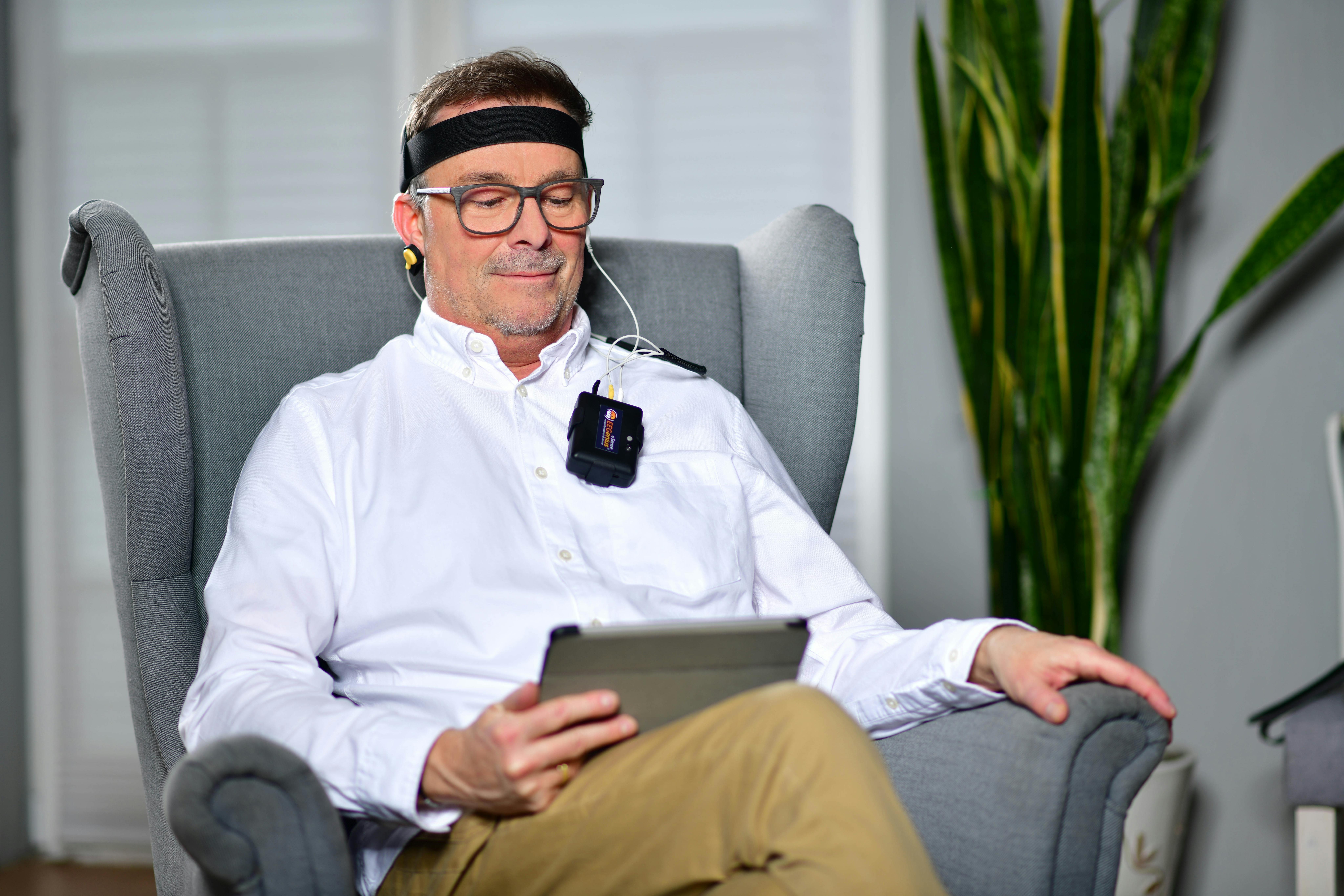
Sleep is no longer just about closing your eyes and hoping for the best. With neurofeedback sleep systems, you’re entering a new era of intelligent rest that transforms how your brain recovers each night.

🧠 What Are Neurofeedback Sleep Systems and Why Should You Care?
Neurofeedback sleep systems represent a groundbreaking approach to optimizing your nightly rest by monitoring and influencing your brain’s electrical activity in real-time. Unlike traditional sleep aids that rely on medication or basic sleep tracking, these advanced systems use sophisticated sensors to detect your brainwave patterns and provide gentle feedback to guide your brain into deeper, more restorative sleep states.
The technology works by placing small, non-invasive sensors on your scalp that detect electrical signals produced by your neurons. These signals are then analyzed by specialized algorithms that identify which sleep stage you’re in and whether your brain is exhibiting optimal patterns for recovery. When the system detects suboptimal patterns, it provides subtle audio, visual, or tactile feedback to help guide your brain back into healthier sleep rhythms.
This isn’t science fiction—it’s neuroscience in action. Research institutions and sleep laboratories worldwide have been studying neurofeedback for decades, and the technology has finally become accessible for home use. The implications are profound: instead of passively experiencing whatever sleep quality your stressed nervous system can muster, you’re actively training your brain to sleep better over time.
The Science Behind Better Sleep Through Brain Training
Your brain operates on different frequencies throughout the night, cycling through distinct sleep stages that each serve specific biological functions. Delta waves dominate during deep sleep, theta waves appear during light sleep and REM, while alpha and beta waves become more prominent as you approach wakefulness. The quality of your sleep depends heavily on how smoothly your brain transitions between these states and how much time you spend in each stage.
Neurofeedback sleep systems excel at identifying disruptions in these natural rhythms. Perhaps your brain struggles to produce sufficient delta waves for deep sleep, or maybe you experience excessive beta wave activity that keeps you in a state of hyperarousal throughout the night. Whatever the issue, these systems can detect it and help you address it through targeted training.
The feedback mechanism works on the principle of operant conditioning—your brain receives positive reinforcement when it produces desired wave patterns and gentle correction when it strays off course. Over multiple sessions, your brain learns to self-regulate more effectively, essentially developing new neural pathways that support healthier sleep architecture.
Understanding Your Brainwave Patterns During Sleep
Different sleep stages produce characteristic brainwave signatures that neurofeedback systems can identify:
- Delta waves (0.5-4 Hz): Associated with deep, restorative sleep where physical recovery occurs
- Theta waves (4-8 Hz): Present during light sleep and REM, crucial for memory consolidation
- Alpha waves (8-13 Hz): Appear during drowsiness and the transition to sleep
- Beta waves (13-30 Hz): Dominant during wakefulness and unwanted during sleep
- Gamma waves (30+ Hz): Associated with high-level information processing and consciousness
By monitoring these frequencies throughout the night, neurofeedback systems create a detailed map of your sleep architecture, revealing patterns you never knew existed and opportunities for improvement you couldn’t have discovered otherwise.
💤 Real-World Benefits You’ll Actually Notice
The advantages of neurofeedback sleep systems extend far beyond abstract brainwave optimization. Users consistently report tangible improvements that transform their daily lives within weeks of beginning training.
First and foremost, you’ll likely experience a dramatic reduction in the time it takes to fall asleep. By training your brain to transition more efficiently from waking beta waves to sleep-conducive alpha and theta waves, you’ll spend less time tossing and turning and more time actually resting. Many users report falling asleep 30-50% faster after just a few weeks of consistent neurofeedback training.
Sleep quality improvements often manifest as feeling genuinely refreshed upon waking—something that might seem like a distant memory if you’ve been struggling with poor sleep for years. This happens because neurofeedback helps you spend more time in deep sleep stages, where physical restoration occurs. Your muscles repair themselves, your immune system strengthens, and your body performs essential maintenance that simply cannot happen during lighter sleep stages.
Cognitive Performance Gets a Major Boost
When your brain receives the deep, structured sleep it needs, cognitive benefits emerge quickly. Memory consolidation improves dramatically, as your brain has adequate time in the right sleep stages to transfer information from short-term to long-term storage. Students and professionals report better recall, faster learning, and enhanced problem-solving abilities after optimizing their sleep with neurofeedback systems.
Emotional regulation also sees significant improvement. Sleep deprivation and poor sleep quality are strongly linked to mood disorders, anxiety, and emotional volatility. By ensuring your brain cycles properly through all necessary sleep stages, neurofeedback helps maintain the neurochemical balance required for stable mood and resilience against stress.
🎯 Who Benefits Most from Neurofeedback Sleep Technology?
While virtually anyone can benefit from better sleep, certain groups experience particularly dramatic improvements with neurofeedback sleep systems.
Athletes and fitness enthusiasts discover that recovery accelerates when sleep quality improves. During deep sleep, your body releases growth hormone, repairs muscle tissue, and consolidates the motor learning that occurred during training. Professional sports teams and Olympic training centers have incorporated neurofeedback specifically for its sleep optimization benefits, recognizing that recovery is just as important as training intensity.
High-performing professionals dealing with stress and demanding schedules find neurofeedback invaluable for maintaining peak cognitive function despite limited sleep windows. When you can’t increase sleep quantity, maximizing sleep quality becomes essential. Neurofeedback ensures that every minute of sleep delivers maximum restorative value.
Special Populations with Unique Sleep Challenges
Individuals with chronic insomnia often struggle with hyperarousal—their brains produce excessive beta waves that prevent the transition into sleep. Neurofeedback directly addresses this problem by training the brain to reduce this unwanted activity, offering relief where medications have failed or produced unwanted side effects.
People with attention deficit disorders frequently experience disrupted sleep architecture that compounds their daytime symptoms. Neurofeedback training can help regulate both sleep and waking brain patterns, addressing multiple challenges simultaneously.
Those recovering from traumatic brain injuries or dealing with post-traumatic stress disorder often experience profound sleep disruptions. Neurofeedback offers a drug-free approach to restoring healthier sleep patterns without the risk of dependency or side effects associated with sleep medications.
Choosing the Right Neurofeedback Sleep System for Your Needs
The neurofeedback sleep technology market has expanded rapidly, offering options ranging from clinical-grade systems costing thousands of dollars to consumer-friendly devices priced for everyday budgets. Understanding the key features helps you make an informed decision.
Sensor quality determines accuracy. Look for systems using medical-grade EEG sensors that can reliably detect brainwave patterns despite movement and variations in scalp contact. Dry sensors offer convenience but may sacrifice some accuracy compared to traditional wet electrode systems that use conductive gel.
The feedback mechanism matters significantly. Some systems use audio tones that adjust based on your brainwave patterns, others use gentle vibrations, and some combine multiple feedback modalities. Consider what type of feedback you’ll find helpful rather than disruptive to your sleep process.
Essential Features to Look For
- Real-time monitoring: The system should provide immediate feedback, not just collect data for later analysis
- Personalized protocols: Look for systems that adapt to your unique brainwave patterns rather than using generic approaches
- Data visualization: Comprehensive apps that show your sleep architecture and progress over time
- Comfort design: Headbands or sensors comfortable enough to wear throughout the night
- Battery life: Sufficient power to last through a full night’s sleep without interruption
- Clinical validation: Evidence from peer-reviewed studies supporting the system’s effectiveness
Price correlates somewhat with features and accuracy, but expensive doesn’t always mean better for your specific needs. A mid-range system that you’ll actually use consistently will deliver better results than a high-end device that feels too complicated or uncomfortable.
🚀 Getting Started: Your First Month with Neurofeedback Sleep Training
Beginning neurofeedback sleep training requires patience and consistency. Your brain has likely been following problematic sleep patterns for months or years, and changing these ingrained patterns takes time.
Week one focuses on baseline establishment. The system needs to learn your normal brainwave patterns before it can effectively provide feedback. During this period, wear the device consistently but don’t expect immediate improvements. You’re gathering data that will inform all future training sessions.
Weeks two through four involve active training. The system now provides feedback designed to guide your brain toward healthier patterns. You might not consciously perceive this feedback, as it often works at subconscious levels, but your brain is learning nonetheless. Many users report noticeable improvements around the two to three week mark.
Maximizing Your Training Results
Consistency trumps intensity with neurofeedback training. Using the system nightly delivers better results than sporadic use, even if you’re tired or traveling. Your brain needs regular training sessions to consolidate new patterns.
Combine neurofeedback with solid sleep hygiene practices for optimal results. The technology is powerful, but it works best when you’re also maintaining consistent sleep schedules, managing caffeine intake appropriately, and creating a sleep-conducive environment. Think of neurofeedback as the catalyst that makes all your other sleep optimization efforts more effective.
Track your subjective experience alongside the objective data. Keep a simple sleep diary noting how you feel upon waking, your energy levels throughout the day, and any changes in mood or cognitive function. This qualitative information helps you understand the real-world impact of the brainwave changes the system is measuring.
Common Challenges and How to Overcome Them
New neurofeedback users sometimes experience an adjustment period where sleep temporarily seems worse before it improves. This happens because your brain is actively changing established patterns, which can feel disruptive initially. Persistence is key—these temporary disruptions typically resolve within one to two weeks.
Sensor placement can be tricky initially. Most systems require specific positioning to accurately detect brainwaves, and finding the right placement might take several attempts. Carefully follow the manufacturer’s instructions and don’t hesitate to contact support if you’re struggling to get consistent readings.
Some users worry about becoming dependent on the technology. In reality, neurofeedback training aims to teach your brain new patterns that persist even without the device. Think of it like physical therapy for your brain—you use the system intensively during the training phase, then gradually reduce usage as your brain maintains improved patterns independently.
🌟 The Future of Sleep Technology Is Already Here
Neurofeedback sleep systems represent just the beginning of a broader revolution in sleep optimization. Emerging technologies are integrating artificial intelligence that can predict sleep disruptions before they occur and adjust feedback protocols in real-time based on multiple physiological signals beyond just brainwaves.
Integration with smart home technology is creating comprehensive sleep environments where lighting, temperature, sound, and neurofeedback work together seamlessly. Imagine your bedroom automatically adjusting all environmental factors while your neurofeedback system guides your brain into optimal sleep states—this coordinated approach is becoming reality.
Research into closed-loop systems—where the feedback happens during specific sleep stages for maximum effectiveness—promises even better results. These advanced systems can deliver targeted interventions precisely when your brain is most receptive to change, potentially accelerating the training process significantly.
Making the Investment in Your Sleep Health
When evaluating whether neurofeedback sleep systems are worth the investment, consider the cumulative impact of poor sleep on your life. Reduced cognitive function, decreased immune system performance, higher stress levels, impaired emotional regulation, and increased accident risk all carry substantial costs—both financial and personal.
Quality neurofeedback systems range from $300 to $3000 depending on features and sophistication. Compared to years of sleep medications, endless supplements, or the productivity losses from chronic poor sleep, these systems often pay for themselves within months through improved performance and wellbeing.
Many users report that improved sleep quality represents one of the highest-return investments they’ve ever made in their health. When you consider that you spend roughly one-third of your life sleeping, optimizing those hours makes tremendous sense from both quality of life and practical productivity perspectives.

Taking Control of Your Sleep Destiny 😴
You no longer need to accept poor sleep as an inevitable consequence of modern life. Neurofeedback sleep systems provide scientifically-validated tools that empower you to actively improve your sleep quality rather than passively hoping for better rest.
The technology works by addressing sleep problems at their source—the brainwave patterns that determine sleep quality. By training your brain to produce healthier patterns, you’re creating lasting improvements rather than temporarily masking symptoms.
Whether you’re an athlete seeking competitive advantage through better recovery, a professional needing peak cognitive function, or simply someone tired of feeling tired, neurofeedback sleep technology offers a practical path toward the restorative sleep your body and brain desperately need.
The revolution in sleep technology isn’t coming—it’s already here. The only question is when you’ll take advantage of these remarkable tools to transform your nights and, consequently, your days. Your brain has an incredible capacity to learn and adapt. Give it the right training, and watch as sleep transforms from a frustrating struggle into a reliable source of restoration and renewal.