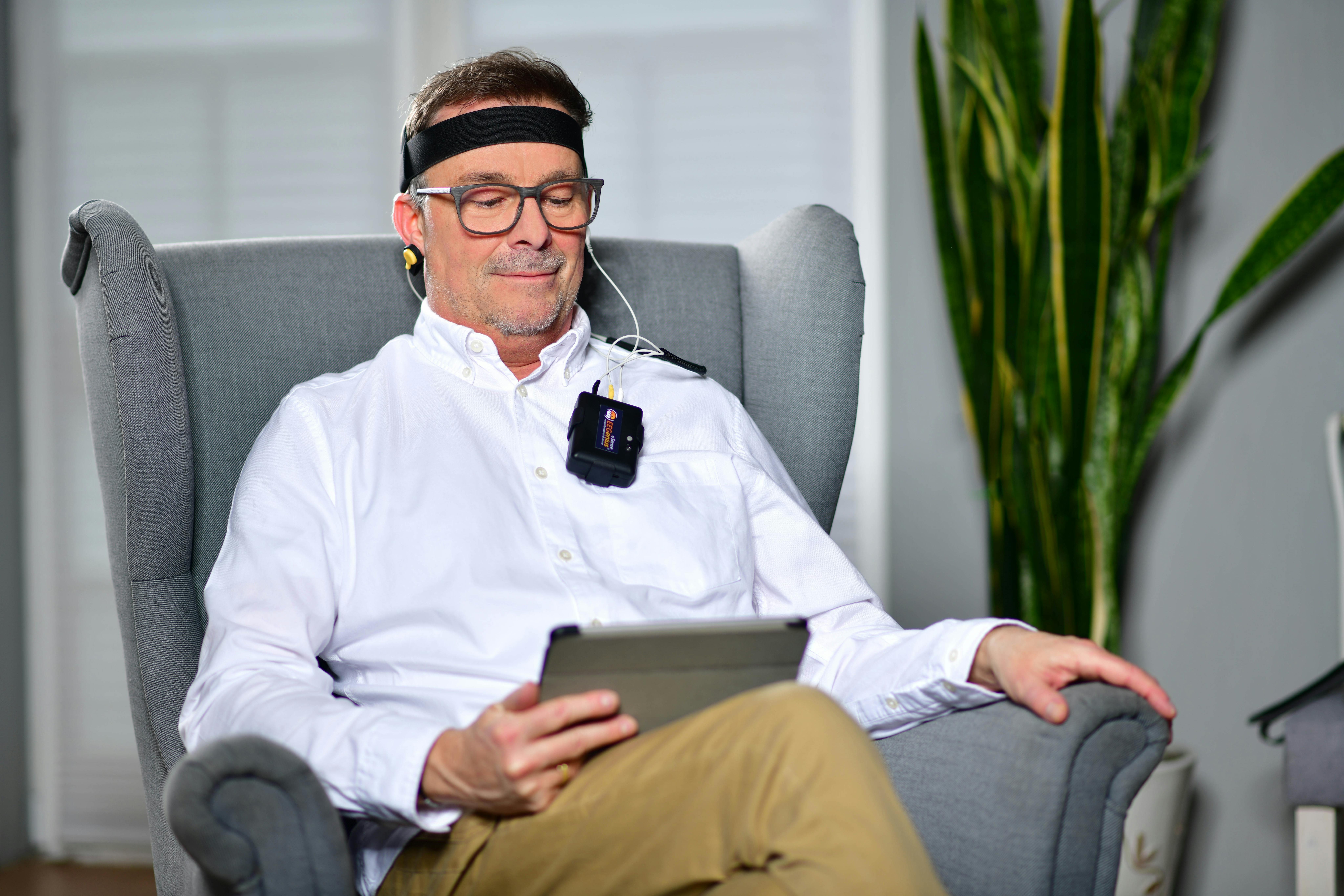
Your mind holds extraordinary power waiting to be unlocked through strategic cognitive state modulation—a scientifically-backed approach to achieving peak performance in every area of your life.

🧠 Understanding the Science Behind Cognitive State Modulation
Cognitive state modulation refers to the deliberate alteration of your mental state to optimize brain function for specific tasks or outcomes. Unlike passive mental states that occur randomly throughout your day, this approach involves actively shifting your consciousness between different neural patterns to maximize efficiency, creativity, focus, and overall performance.
Neuroscience research has demonstrated that our brains operate in distinct states characterized by different brainwave patterns. These patterns—ranging from high-frequency beta waves associated with active thinking to slower alpha and theta waves linked to relaxation and creativity—directly influence our cognitive capabilities at any given moment.
When you learn to intentionally modulate these states, you essentially gain access to an internal control panel for your mind. This isn’t about mystical thinking or pseudoscience; it’s grounded in decades of neurological research and practical application across fields ranging from elite athletics to executive leadership.
The Four Primary Cognitive States for Peak Performance
Understanding the different cognitive states available to you is the first step toward harnessing their power. Each state serves distinct purposes and offers unique advantages depending on your current objectives.
🎯 The Flow State: Where Peak Performance Lives
Flow represents the optimal state of consciousness where you feel your best and perform your best. Identified and named by psychologist Mihaly Csikszentmihalyi, flow occurs when your skills perfectly match the challenge at hand, creating a state of effortless concentration and heightened performance.
During flow, your prefrontal cortex—the brain region responsible for self-criticism and doubt—temporarily quiets down through a process called transient hypofrontality. This allows for enhanced pattern recognition, accelerated learning, and seamless execution of complex tasks.
Characteristics of flow state include:
- Complete absorption in the present moment
- Loss of self-consciousness and time awareness
- Immediate feedback on actions and decisions
- Intrinsic motivation and enjoyment of the activity
- Enhanced creativity and problem-solving abilities
⚡ High-Beta Alert State: Maximum Focus and Analysis
The high-beta state represents your brain’s most active analytical mode, characterized by brainwaves ranging from 18-40 Hz. This state excels for tasks requiring intense focus, logical reasoning, and complex problem-solving.
However, prolonged periods in high-beta can lead to stress, anxiety, and mental fatigue. The key is learning when to activate this state and when to shift away from it. Strategic use of high-beta states can dramatically improve your performance on demanding cognitive tasks without burning out.
🌊 Alpha State: The Gateway to Creative Insight
Alpha brainwaves (8-12 Hz) create a relaxed yet alert mental state often described as “relaxed focus.” This state bridges the gap between conscious and subconscious processing, making it ideal for creative problem-solving, learning new information, and generating innovative ideas.
Many breakthrough moments occur in alpha states—those “aha!” insights that seem to appear from nowhere. By intentionally cultivating alpha states, you create conditions favorable for creative breakthroughs and enhanced learning capacity.
🧘 Theta State: Deep Insight and Emotional Integration
Theta waves (4-8 Hz) dominate during deep meditation, light sleep, and hypnagogic states. This deeply relaxed state allows for emotional processing, memory consolidation, and access to subconscious insights.
While less commonly used for active performance tasks, theta states play a crucial role in recovery, emotional regulation, and the integration of learning experiences. Regular access to theta states can significantly improve overall cognitive health and resilience.
Practical Techniques for Modulating Your Cognitive State
Understanding cognitive states is valuable, but the real power comes from learning practical techniques to shift between them intentionally. These methods range from ancient practices validated by modern science to cutting-edge technological interventions.
🎵 Binaural Beats and Auditory Entrainment
Binaural beats use slightly different frequencies played in each ear to encourage your brain to synchronize with a target frequency. Research suggests this auditory entrainment can facilitate transitions between cognitive states, though effects vary among individuals.
Different frequency targets produce different states: beta frequencies for focus, alpha for relaxed alertness, and theta for deep relaxation. Many people find binaural beats particularly effective when combined with other modulation techniques.
💨 Breathwork: The Most Accessible State-Modulation Tool
Breathing techniques offer one of the most powerful and accessible methods for cognitive state modulation. By altering your breathing pattern, you directly influence your nervous system, which in turn affects your mental state.
Box breathing (4-4-4-4 pattern) promotes calm focus, ideal for transitioning into flow states. Rapid breathing techniques like Wim Hof method or holotropic breathwork can induce altered states conducive to breakthrough insights. Slow, deep breathing activates the parasympathetic nervous system, facilitating recovery and theta-state access.
🏃 Movement and Physical Triggers
Physical activity serves as a potent catalyst for cognitive state changes. Vigorous exercise triggers flow states by releasing neurochemicals like dopamine, norepinephrine, and endorphins—the same chemicals present during peak performance.
Even simple movements can shift mental states. A brief walk changes your perspective and often unlocks creative solutions. Strategic stretching releases tension that keeps you locked in unproductive mental patterns. Dance and rhythmic movement can induce trance-like states that facilitate emotional processing and creative expression.
🎨 Environmental Design for State Optimization
Your environment profoundly influences your cognitive state, often without conscious awareness. By intentionally designing your surroundings, you create conditions that naturally promote desired mental states.
Lighting plays a crucial role: bright, blue-spectrum light promotes alertness and high-beta states, while warm, dim lighting facilitates relaxation and alpha states. Temperature affects cognition too—slightly cooler environments typically enhance focus, while warmth promotes relaxation.
Sound environments matter enormously. Complete silence works for some tasks, while others benefit from ambient noise, nature sounds, or specific music genres. Experiment to discover what acoustic environments optimize your performance for different activities.
Building Your Personal State-Modulation Protocol
The most effective approach to cognitive state modulation is highly personalized. What works brilliantly for one person might prove ineffective for another due to individual neurological differences, personal history, and lifestyle factors.
📊 Tracking and Measurement
Effective optimization requires measurement. Begin tracking your cognitive states and performance across different conditions. Note which techniques consistently produce desired results and which prove less effective for you personally.
| State | Best For | Trigger Techniques |
|---|---|---|
| High Beta | Analytical work, urgent deadlines | Cold exposure, caffeine, time pressure |
| Flow | Creative work, complex tasks | Clear goals, challenge-skill balance, deep focus |
| Alpha | Learning, ideation, light creativity | Meditation, nature exposure, gentle music |
| Theta | Integration, emotional processing | Deep meditation, hypnagogia, visualization |
⏰ Chronobiology and Optimal Timing
Your natural circadian rhythms create windows of opportunity for different cognitive states. Most people experience peak analytical performance in late morning, while creative thinking often improves in the evening when mental fatigue slightly reduces executive control.
Align your most demanding tasks with your biological prime time. Schedule analytical work during your natural focus peaks, creative sessions when you’re slightly tired but not exhausted, and recovery practices during natural energy dips.
Advanced Strategies for Elite Performance
Once you’ve mastered basic state modulation, advanced techniques can elevate your capabilities even further. These approaches require more practice but offer exponentially greater returns.
🔄 State Stacking and Transitional Protocols
State stacking involves deliberately moving through multiple states in sequence to achieve specific outcomes. For example, starting with breathwork to enter alpha, then adding challenge and focus to transition into flow, creates a more reliable pathway than attempting to jump directly into peak states.
Develop personal protocols for different goals. A pre-performance routine for important presentations might include physical activation, focused breathing, and visualization. A creative session might begin with meditation, followed by free-writing in alpha state, then structured development in flow.
🎭 Anchoring and State Conditioning
Neuro-linguistic programming offers powerful anchoring techniques that allow you to associate specific triggers with desired states. By consistently pairing a particular gesture, phrase, or sensory cue with a peak state, you eventually condition your nervous system to enter that state upon encountering the trigger.
Elite performers often use pre-game rituals that serve as anchors. These aren’t superstitions—they’re scientifically-grounded methods for reliably accessing optimal mental states under pressure.
💊 Nootropics and Nutritional Optimization
While behavioral techniques form the foundation of cognitive state modulation, targeted nutrition and supplementation can enhance your capacity for state shifts. Certain compounds support specific cognitive states when used responsibly and strategically.
Caffeine combined with L-theanine promotes focused alertness without jitters. Omega-3 fatty acids support overall brain health and neuroplasticity. Magnesium facilitates relaxation and recovery. However, supplements should complement—never replace—fundamental practices like sleep, exercise, and stress management.
🚀 Integrating Cognitive State Modulation Into Daily Life
The true power of cognitive state modulation emerges through consistent integration into your daily routine. This isn’t about occasional peak performance—it’s about systematically elevating your baseline capabilities across all domains.
Start your day with intentional state setting rather than reactive scrolling. A morning protocol might include meditation for alpha-state benefits, followed by light exercise and strategic caffeine use to transition into productive beta states.
Throughout your workday, recognize natural attention cycles and work with them rather than against them. Use the ultradian rhythm—natural 90-minute cycles of alertness—to structure deep work sessions, with deliberate state shifts during breaks.
Evening routines should prioritize downshifting from active states. Blue-light blocking, progressive relaxation, and evening meditation help transition toward sleep-conducive states. Quality rest isn’t just recovery—it’s when your brain consolidates learning and integrates experiences.
Common Pitfalls and How to Avoid Them
Even with solid understanding, practitioners often encounter obstacles that limit their state-modulation effectiveness. Awareness of these common pitfalls helps you navigate around them.
⚠️ The Forcing Paradox
Trying too hard to achieve a particular state often prevents its emergence. Flow, in particular, resists forced entry. The solution involves creating conditions that favor desired states, then releasing attachment to outcomes. Set up the right challenge level, eliminate distractions, and trust the process.
🔋 Ignoring Recovery Cycles
Sustainable high performance requires strategic recovery. Attempting to maintain peak states continuously leads to burnout, not breakthroughs. Build deliberate downtime into your protocol, recognizing that theta and delta states during rest periods enable subsequent access to flow and focus states.
📱 Digital Interference
Constant connectivity fragments attention and prevents deep state entry. Successful state modulation requires protecting your attention from digital intrusion. During focused work periods, eliminate notifications, batch communication, and create friction between you and potential distractions.
Measuring Progress and Refining Your Approach
Effective cognitive state modulation is an iterative process requiring regular assessment and adjustment. Track both subjective experiences and objective performance metrics to identify what genuinely works versus what merely feels productive.
Subjective indicators include perceived energy levels, ease of concentration, creative output quality, and emotional state throughout the day. Objective measures might include task completion rates, error frequencies, time to complete standard activities, and quality of work products.
Review your practices monthly, looking for patterns and correlations. Which techniques consistently precede your best work? When do you naturally enter flow? What disrupts your optimal states? Use these insights to continuously refine your personal protocol.

🌟 The Long-Term Impact of Mastering Your Mental States
Developing proficiency in cognitive state modulation creates compound benefits that extend far beyond immediate performance gains. Over time, you develop meta-awareness—the ability to observe your mental state objectively and adjust accordingly.
This metacognitive skill transforms how you approach challenges, relationships, and personal growth. Rather than feeling at the mercy of your moods and mental states, you gain genuine agency over your inner experience. Stress becomes manageable because you can downshift your nervous system. Creative blocks dissolve because you know how to access generative states. Performance anxiety diminishes because you’ve rehearsed optimal states repeatedly.
Perhaps most importantly, consistent practice builds neuroplasticity—your brain’s ability to form new neural pathways. Each time you successfully modulate your state, you strengthen the neural circuits that enable that transition. What initially requires significant effort eventually becomes nearly automatic, expanding your baseline capabilities permanently.
The journey toward peak performance through cognitive state modulation isn’t a destination but an ongoing practice. Each day offers opportunities to refine your understanding of your unique neurology and enhance your ability to access your full potential. The tools exist, the science is sound, and the path is clear—now it’s simply a matter of committed practice and intelligent experimentation.
Your potential isn’t fixed or limited by circumstance. Through deliberate cultivation of optimal cognitive states, you can systematically unlock capacities that might currently seem beyond reach. The question isn’t whether you have untapped potential—you absolutely do. The question is whether you’ll develop the skills to access it consistently, transforming occasional peak experiences into your new normal.