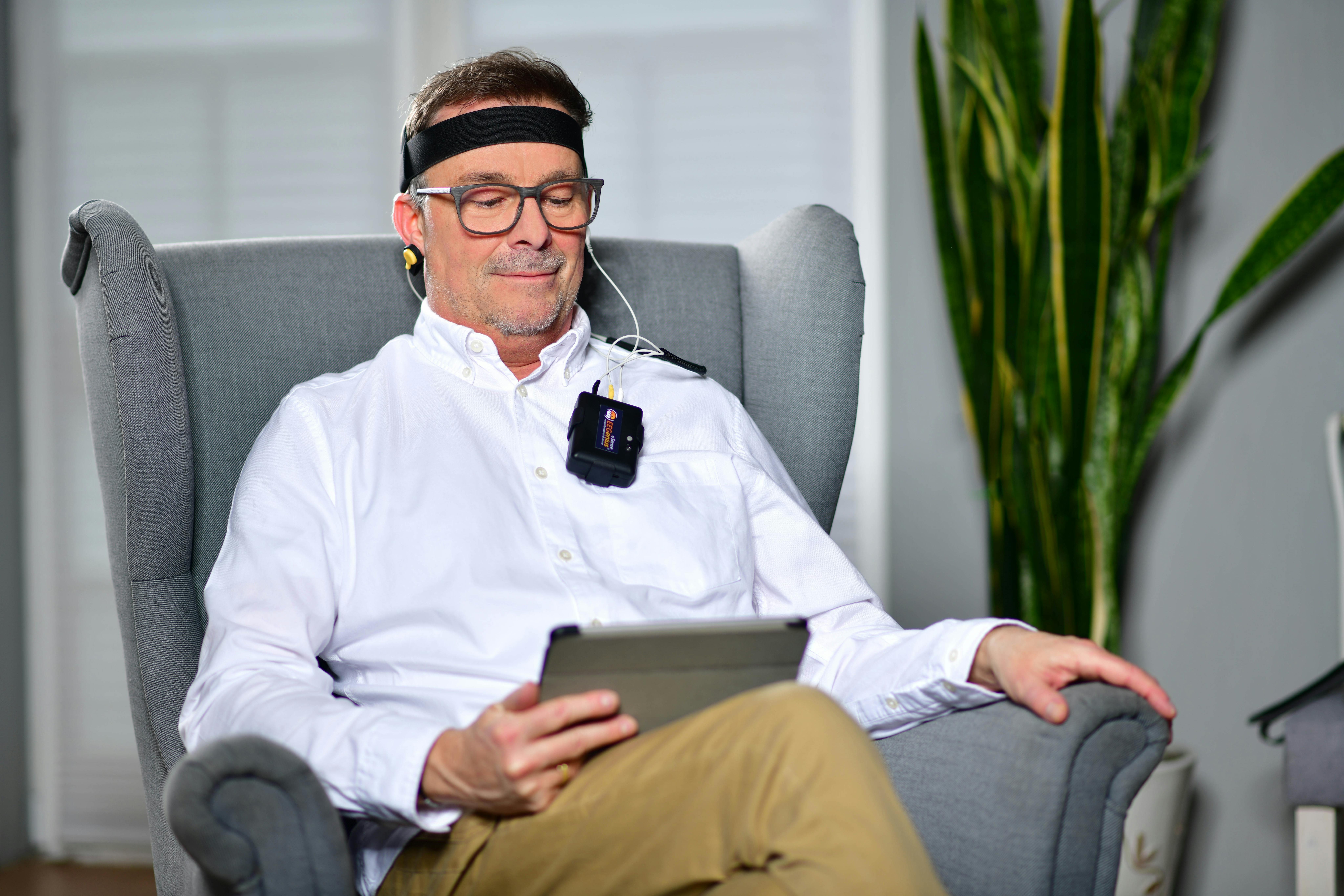
Your brain is the most powerful organ you possess, yet most people never learn to tap into its full potential. Neurofeedback technology is changing that reality.

🧠 What Is Neurofeedback and Why Does It Matter?
Neurofeedback represents a revolutionary approach to brain training that uses real-time displays of brain activity to teach self-regulation of brain function. This non-invasive technique monitors your brainwaves through electroencephalography (EEG) and provides immediate feedback, allowing you to understand and modify your neural patterns consciously.
The human brain generates electrical impulses that can be measured and analyzed. These brainwaves fall into different frequency bands, each associated with specific mental states. By learning to control these patterns, individuals can enhance cognitive performance, reduce anxiety, improve focus, and address various neurological conditions.
What makes neurofeedback particularly exciting is its foundation in neuroplasticity—the brain’s remarkable ability to reorganize itself by forming new neural connections throughout life. Through consistent training, you can literally rewire your brain for better performance, emotional regulation, and overall mental wellness.
The Science Behind EEG-Based Brain Training
Electroencephalography has been used in medical settings since the 1920s, but only recently has the technology become accessible enough for personal use. Modern EEG platforms capture electrical activity from the scalp using sensors that detect voltage fluctuations resulting from ionic current flows within neurons.
These brainwave patterns are categorized into five primary frequency bands:
- Delta waves (0.5-4 Hz): Associated with deep sleep and healing
- Theta waves (4-8 Hz): Connected to meditation, creativity, and memory
- Alpha waves (8-13 Hz): Linked to relaxed alertness and stress reduction
- Beta waves (13-30 Hz): Related to active thinking, focus, and problem-solving
- Gamma waves (30-100 Hz): Associated with peak cognitive performance and consciousness
Neurofeedback training helps individuals learn to increase or decrease specific frequency bands based on their goals. Someone struggling with anxiety might work on increasing alpha waves while reducing excessive beta activity. An athlete seeking peak performance might train to enhance gamma wave production during critical moments.
The Clinical Evidence Supporting Neurofeedback
Decades of research have established neurofeedback as an evidence-based intervention for numerous conditions. Studies published in peer-reviewed journals demonstrate its effectiveness for attention deficit hyperactivity disorder (ADHD), with some research showing comparable results to medication without the side effects.
The technique has also shown promise for treating anxiety disorders, depression, post-traumatic stress disorder (PTSD), epilepsy, and even supporting recovery from traumatic brain injuries. Athletes use neurofeedback to achieve flow states more consistently, while business executives employ it to enhance decision-making capabilities and manage stress.
🚀 The Evolution of Consumer EEG Platforms
The democratization of neurofeedback technology represents one of the most significant developments in personal wellness technology. What once required expensive clinical equipment and specialized practitioners can now be accessed through consumer-grade EEG devices costing a fraction of traditional systems.
Early consumer EEG devices were limited in functionality and accuracy. Modern platforms, however, leverage advanced signal processing algorithms, machine learning, and improved sensor technology to deliver clinical-grade results in portable formats.

These platforms typically consist of a headband or cap equipped with dry or semi-dry electrodes that don’t require conductive gel—a major improvement over traditional clinical EEG systems. The devices connect wirelessly to smartphones or computers, where sophisticated software analyzes brainwave data in real-time and presents it through engaging interfaces.
Leading EEG Platforms Transforming Personal Brain Training
Several companies have emerged as leaders in the consumer neurofeedback space, each offering unique approaches to brain training. Muse has gained popularity with its meditation-focused headband that provides audio feedback based on brain activity, helping users develop mindfulness practices more effectively.
NeuroSky pioneered affordable single-sensor EEG technology, making brain-computer interfaces accessible for gaming and basic attention training. Their MindWave headset has been used in research, education, and entertainment applications worldwide.
More advanced systems like Emotiv offer multi-channel EEG with professional-grade sensors, suitable for both personal optimization and research applications. Their platforms provide detailed brainwave analysis and support various neurofeedback protocols.
💡 Practical Applications for Everyday Life
The versatility of neurofeedback extends far beyond clinical applications. Professionals across industries are discovering how brain training can provide competitive advantages and improve quality of life.
Enhancing Focus and Productivity
In our distraction-filled world, the ability to maintain sustained attention has become a superpower. Neurofeedback training helps strengthen neural pathways associated with concentration, teaching your brain to enter and maintain focused states more easily.
Users report being able to work for extended periods without mental fatigue, process information more efficiently, and resist the pull of digital distractions. The training essentially builds your attention muscle through repetition and reinforcement of desired brain states.
Managing Stress and Anxiety
Chronic stress and anxiety create harmful patterns of neural activation that become habitual over time. Neurofeedback provides a mirror to these patterns, showing you exactly when your brain enters stressed states and teaching you to shift into calmer configurations.
By consistently practicing relaxation protocols, individuals develop the ability to recognize and interrupt anxiety spirals before they escalate. This self-regulation skill becomes increasingly automatic with practice, fundamentally changing how you respond to stressors.
Optimizing Sleep Quality
Sleep disorders affect millions globally, with cascading effects on health, performance, and wellbeing. Neurofeedback protocols targeting sleep architecture help individuals increase delta wave production and establish healthier sleep patterns.
Training before bedtime can facilitate the transition from waking consciousness to restorative sleep states. Users often report falling asleep faster, experiencing fewer nighttime awakenings, and waking more refreshed.
Athletic and Creative Performance
Peak performance states—whether in sports, arts, or professional domains—have distinct neurological signatures. Neurofeedback allows performers to identify their optimal brain states and train to access them on demand.
Athletes use this technology to enhance reaction times, maintain composure under pressure, and accelerate skill acquisition. Musicians and artists employ neurofeedback to access creative flow states more consistently, breaking through blocks and enhancing artistic output.
🎯 Getting Started with Neurofeedback Training
Beginning your neurofeedback journey requires understanding both the technology and the commitment involved. Like any skill development, brain training produces results through consistent practice over time.
Choosing the Right Platform
Selecting an appropriate EEG platform depends on your specific goals, budget, and technical comfort level. Entry-level devices work well for meditation, basic attention training, and general wellness, while advanced multi-channel systems suit those pursuing specific performance goals or addressing clinical conditions.
Consider factors such as sensor quality, available protocols, software features, community support, and scientific validation when making your choice. Reading user reviews and independent assessments helps separate marketing claims from actual capabilities.
Establishing Effective Training Routines
Consistency trumps intensity in neurofeedback training. Regular sessions of 10-20 minutes several times per week produce better results than occasional marathon sessions. Your brain needs time to consolidate learning between sessions.
Create a dedicated training environment free from interruptions. Track your progress through the platform’s analytics features, noting changes in both objective measures and subjective experiences. Many users maintain journals documenting shifts in focus, mood, and performance.
Understanding the Learning Curve
Neurofeedback is a skill that develops progressively. Initial sessions might feel confusing or frustrating as you learn to recognize and influence your brain states. Most people begin noticing benefits within 10-15 sessions, with substantial improvements emerging after 20-40 sessions.
Some individuals respond quickly to training while others require more time. Factors affecting response include neurological condition, training consistency, proper protocol selection, and individual neuroplasticity capacity.
🔮 The Future of Neurofeedback Technology
The neurofeedback field stands at an exciting inflection point where rapidly advancing technology meets growing scientific understanding of brain function. Several trends are shaping the future of this domain.
Artificial Intelligence Integration
Machine learning algorithms are revolutionizing how neurofeedback systems analyze brainwave data and personalize training protocols. AI can identify subtle patterns invisible to human analysis, predict optimal training parameters, and automatically adjust protocols based on progress.
Future systems will likely function as intelligent brain coaches, understanding your unique neural profile and guiding you through customized training pathways optimized for your specific goals and neurological characteristics.
Enhanced Sensor Technology
Next-generation EEG sensors promise improved signal quality, greater comfort, and easier setup. Innovations in materials science are producing dry electrodes that match wet electrode performance without the mess and preparation time.
Miniaturization continues advancing, with some prototypes incorporating EEG sensors into everyday items like earbuds or glasses. This seamless integration will enable continuous brain monitoring and opportunistic training moments throughout daily life.
Virtual and Augmented Reality Applications
Combining neurofeedback with immersive VR and AR environments creates extraordinarily engaging training experiences. Imagine practicing stress management while virtually standing at the edge of a cliff, or training focus by controlling virtual objects with your brain activity.
These technologies make training more compelling while providing richer contexts for practicing self-regulation skills that transfer more effectively to real-world situations.
Expanding Clinical Applications
Ongoing research continues validating neurofeedback for new conditions and populations. Promising investigations are exploring applications for autism spectrum disorders, substance abuse recovery, age-related cognitive decline, and chronic pain management.
As evidence accumulates, neurofeedback may become a standard component of integrative treatment approaches, complementing or sometimes replacing pharmaceutical interventions for various neurological and psychological conditions.
⚠️ Important Considerations and Limitations
While neurofeedback offers tremendous potential, maintaining realistic expectations is essential. The technology is powerful but not magical, and certain considerations deserve attention.
Not a Quick Fix
Despite marketing claims suggesting rapid transformation, meaningful neurofeedback results require patience and consistency. Brain training is genuine work that demands sustained effort over weeks or months.
Individuals seeking instant solutions may feel disappointed. Those willing to invest time and practice, however, often achieve lasting changes that pharmaceutical approaches cannot provide.
Quality Variation in Consumer Devices
Not all EEG platforms offer equal quality or capabilities. Some consumer devices use minimal sensors and simplified processing that may not capture the full complexity of brain activity.
Research products thoroughly before purchasing, prioritizing those with published validation studies, medical-grade certifications, and positive reviews from credible sources rather than just marketing materials.
Professional Guidance Value
While consumer platforms enable self-directed training, working with qualified neurofeedback practitioners offers advantages, especially when addressing clinical conditions or pursuing sophisticated performance goals.
Practitioners conduct comprehensive assessments, select appropriate protocols, monitor progress, and adjust training parameters based on expertise that self-guided users may lack.
🌟 Taking Control of Your Cognitive Future
The emergence of accessible neurofeedback technology represents a paradigm shift in how we approach mental wellness and cognitive optimization. For the first time in human history, individuals can directly observe and train their brain activity without expensive clinical interventions.
This democratization empowers people to take active roles in enhancing their mental capabilities rather than passively accepting whatever cognitive function they inherited or developed. Like physical fitness training revolutionized how people approach bodily health, neurofeedback may transform our relationship with mental fitness.
The brain you have today isn’t necessarily the brain you must have tomorrow. Through consistent neurofeedback training, you can literally reshape neural patterns, strengthen beneficial connections, and develop mental capabilities you may not have imagined possible.
Whether you seek to manage stress more effectively, enhance focus and productivity, optimize athletic or creative performance, or address specific neurological challenges, neurofeedback platforms provide powerful tools for achieving these goals.
The future of neurofeedback is bright and rapidly approaching. As technology improves, costs decrease, and scientific understanding deepens, brain training will likely become as commonplace as physical exercise. Those who begin exploring these technologies now position themselves at the forefront of a cognitive revolution that will define how humans optimize mental performance in the coming decades.
Your brain’s potential extends far beyond what you currently experience. The question isn’t whether neurofeedback can help you unlock that potential—the evidence clearly demonstrates it can. The question is whether you’re ready to commit to the practice necessary to rewire your neural patterns and discover what your brain is truly capable of achieving.